


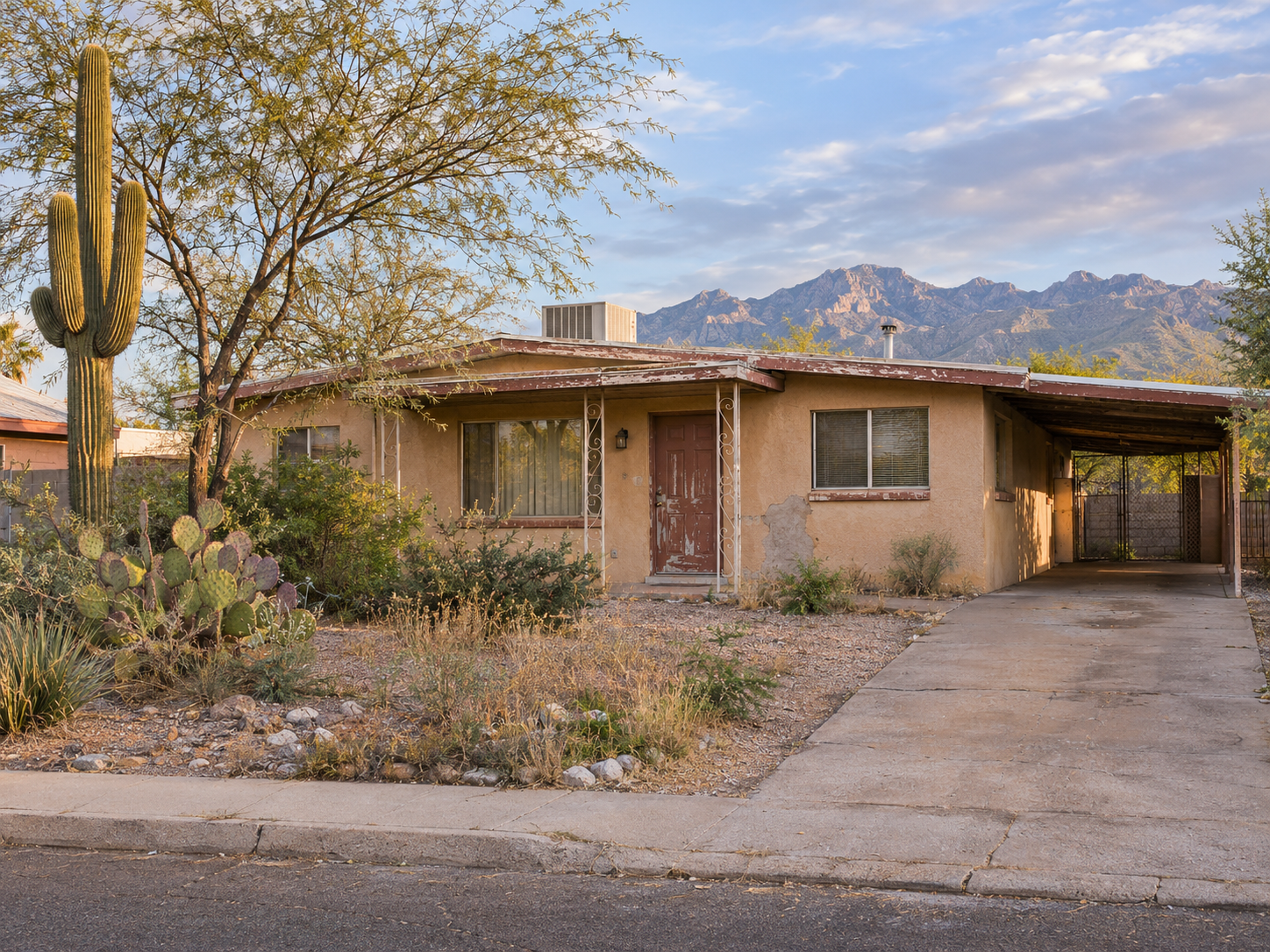
Before you offer on a Tucson house that needs work, sort every issue into cosmetic, operating-system, or structural, then get written scopes for anything beyond paint and flooring. Add permits and a cushion for surprises. If the total still sits comfortably under the finished value of nearby comparable homes, move forward.
Is a Fixer-Upper Worth It in Tucson?
A fixer-upper is worth it in Tucson when the purchase price, a written repair budget, permits, and a cushion for surprises still land below what the home would be worth once it's finished. Price the repairs before you make an offer, using your inspection and contractor estimates instead of guesses. If the deal only works when everything goes perfectly, it isn't a deal.
Key Takeaways
- Tucson homes of all types that sold August–October 2026 had a median sale price of $308,785, down 2% from $315,000 in the same window a year earlier, so a "fixer-upper discount" has to be measured against nearby finished homes, not against a headline number.
- Of recent Tucson listings, 38% had a price cut averaging 3.6%, and months of supply rose to 5.6 from 4.4 a year earlier, which gives buyers more room to negotiate than they had a year ago.
- Sort every finding into cosmetic updates, operating-system repairs, or concealed and structural risks, because only the last two groups should change your offer or your decision to proceed.
- The City of Tucson requires permits and inspections for many residential projects, including air-conditioner installs, water-heater work, and electrical panel work, so permits belong on their own line in your repair worksheet.
- Get written scopes from contractors, not a total on a napkin, and confirm with your lender and an insurance agent before you offer.
How do you price repairs before making an offer on a Tucson fixer-upper?
Sort every issue into three groups, get written scopes for anything that touches systems or structure, and subtract the total (plus a cushion) from what the home would be worth fixed. That number, not the asking price, tells you what the house is really costing you.
Start by sorting the work into three groups
Not every repair deserves the same level of worry. Here's how I separate them with my clients:
| Group | Examples | How it affects your offer |
|---|---|---|
| Cosmetic updates | Paint, flooring, light fixtures, landscaping | Usually priced after you buy. Matters to your budget, rarely to whether you proceed. |
| Operating-system repairs | HVAC replacement, electrical service, plumbing supply, water heater | Get written estimates before you offer. These can justify a lower price or a seller credit. |
| Concealed or structural risks | Roof, foundation, drainage, water damage, suspected environmental hazards | Bring in a specialist. These can change your offer materially or end the deal. |
Cosmetic work is where buyers get excited. The second and third groups are where fixer-uppers get expensive fast.
Get written scopes, not a number on a napkin
Repair costs swing too much from house to house for a figure on a blog page to help you. Your price comes from the contractor who walks your specific property. I'd start with the home inspection, mark what's urgent and what isn't, then bring contractors or specialists in on the flagged items.
Ask every contractor for a written scope that spells out:
- Labor and materials
- Demolition and disposal
- Permit and inspection requirements
- Any engineering or design needs
- Product assumptions (what grade of fixtures, equipment, or materials is priced in)
- Exclusions, including whether concealed damage is excluded
That last item matters most on older Tucson homes. What the inspector can't see behind a wall or under a slab is exactly what a lump-sum bid tends to leave out.
Treat permits as their own line item
Permits are easy to forget and awkward to skip. The City of Tucson's residential permit page says most residential projects need a permit and inspections, including porches, additions, air-conditioner installations, and water-heater work. Electrical service increases and panel replacement or repair are on the list too.
Fees aren't a flat charge. According to the city's Permitting FAQ, building fees are based on project valuation, while mechanical, plumbing, and electrical fees depend on installed items like fixtures, air-conditioning units, and outlets. Exact fees come after plan review, so ask your contractor to show permits separately instead of burying them in a total.
A recent City of Tucson weekly permit report from June 2026 shows how remodel permits list a stated valuation for additions, which is a good reminder that the scope of work and the permit valuation are two different things.
Permits also tell you about the past. Ask whether major prior work, like an addition, a porch, a new air conditioner, or panel work, was permitted and inspected. Unpermitted work can become your problem the day you close.
One more local detail: city rules apply inside the City of Tucson. A home with a Tucson mailing address may sit in Oro Valley, unincorporated Pima County, or another jurisdiction with its own procedures and fee schedules, so confirm the property's jurisdiction first. If you're buying to rent it out, the city's permitting guidance notes that residential rental properties require a licensed contractor for covered improvements, so check how that applies to your project.
Does the Tucson market give you room to negotiate on a house that needs work?
Yes, more than a year ago, but not enough to count on a big discount just because a house is dated. Recent local market data for all home types sold in Tucson August–October 2026 shows a median sale price of $308,785 and a median of $202 per square foot, with 1,030 homes sold compared with 1,253 in the same window a year earlier.
Here's what that data says about your leverage:
- Homes sold for an average of 98.1% of list price, with 20% selling above list and 52% below.
- Months of supply sat at 5.6, up from 4.4 a year earlier.
- 38% of listings had a price cut, averaging 3.6%.
- Median days from listing to going under contract was 33, though 27% of homes went under contract within two weeks.
- Homes for sale now: 3,315 active listings, with 913 new listings in the last 30 days.
Those are citywide figures for every kind of home, not fixer-uppers specifically. A good house in a good spot still moves quickly, while one with obvious problems tends to sit and take reductions. Whether a fixer-upper is worth it in Tucson comes down to the property in front of you, not an average.
Area medians vary widely too, which is why "cheap for the area" can mislead you:
| Area | Median Sale Price | Homes Sold |
|---|---|---|
| Oro Valley | $527,133 | 229 |
| Casas Adobes | $354,753 | 184 |
| Catalina Foothills | $684,524 | 195 |
These are area-level medians. An individual home's value depends on condition, street, build year, and timing. The comparison that matters is what finished homes near your target sold for, and what yours would be worth after the work.
That comparison is also where lenders and appraisers come in. If the appraisal on a house that needs work comes in below your contract price, I walk through your options in what Tucson buyers should do after a low appraisal. And if your inspection points toward settling or cracking, how foundation problems affect a Tucson sale shows how the other side of the table sees it.
What can change your decision after the inspection?
Financing, insurance, and the size of the unknowns can each change the math, and any one of them can be a reason to renegotiate or walk away. Your specific answer depends on the house, the lender, and the findings, which is exactly what I sort out with buyers before they write an offer.
Can the repairs be financed?
Sometimes. Renovation loan programs exist, including FHA's, but whether your property and your plan qualify is a lender question. Ask whether the work you're planning can be rolled into the loan, what the lender requires on contractor bids, and how it treats a seller credit. On a house that needs work, I want your lender involved before we write an offer, not after, because the financing path can change what we're able to propose.
Will insurance be a problem?
It can be. An older roof or an outdated electrical panel can affect whether a company will write a policy or what it charges, and those are the same items that show up on an inspection report. Call an insurance agent with the inspection findings in hand and get a real quote while you're still in your inspection window, not the week before closing.
How do you compare a seller credit to a contractor's estimate?
Put them side by side. A credit is a fixed amount agreed in negotiation. A repair is open-ended until the work is done. If a credit is lower than the written estimate for the same scope, you're covering the gap, and if the estimate excludes concealed damage, the real number could climb. Ask your lender how a credit would be treated before you count on it.
When is it too much house to fix?
A fixer-upper stops being worth it in Tucson when:
- The price plus repairs, permits, and a cushion for the unknown leaves no meaningful gap under the finished value of nearby comparable homes.
- A structural, water, or environmental question can't be scoped before your inspection window closes.
- You can't get the house financed or insured on terms that work.
- The project needs more time and tolerance than you have, even if the math looks fine on paper.
I've sat with plenty of buyers who loved a house and still walked once the written scopes came in. That's the process doing its job, not a failure.
Curious how past clients felt about working with me? You can read my reviews on Zillow and Realtor.com.
FAQ
How much should I offer below asking price for a fixer-upper in Tucson?
There's no set percentage that works; your offer should come from the repair math. Start with what the home would be worth finished, subtract your written repair scopes, permits, and a cushion for surprises, and offer from there. For context, recent local market data shows Tucson homes of all types sold August–October 2026 averaged 98.1% of list price, with 52% selling below list.
What repairs should I get estimates for before making an offer?
Get estimates for anything in the operating-system and structural groups: roof, HVAC, electrical service or panel, plumbing supply or sewer, foundation and drainage, and any water damage. Cosmetic work can usually wait until after you own the home. If the inspection flags something you can't judge, bring in a specialist before you decide.
Can I finance a fixer-upper in Tucson with an FHA renovation loan?
It may be possible, but it depends on your lender, the property, and the scope of work. Renovation loan programs exist, and each lender sets its own requirements for bids and contractors. Talk to your lender before you write an offer so you know what's financeable.
Will an old roof or outdated electrical panel make a Tucson home difficult to insure?
It can affect whether you can get coverage or what it costs. Roof age and electrical condition are common items insurers look at. Get a quote using your inspection findings during your inspection period so there are no surprises at closing.
Which home repairs require a permit in the City of Tucson?
Most residential projects need a permit and inspections, including porches, additions, air-conditioner installations, water-heater work, and electrical panel work. The City of Tucson residential permit page lists what applies. Those rules cover properties inside city limits, so confirm your home's jurisdiction first.
The short version: price the repairs before you price the house. If you're weighing a Tucson home that needs work, I'll help you sort the inspection findings, line up estimates, and decide what the numbers actually support. Get a free home valuation if you're also thinking about selling, or start your home search and we'll look at fixer-uppers together.
Equal Housing Opportunity. Rebecca Maher, Associate Broker; Accredited Buyer's Representative (ABR), Seller Real Estate Specialist (SRS), Graduate Realtor Institute (GRI). Regulated by the Arizona Department of Real Estate. This article is general information, not legal, tax, or financial advice; confirm your own numbers with your escrow officer, tax advisor, or lender.