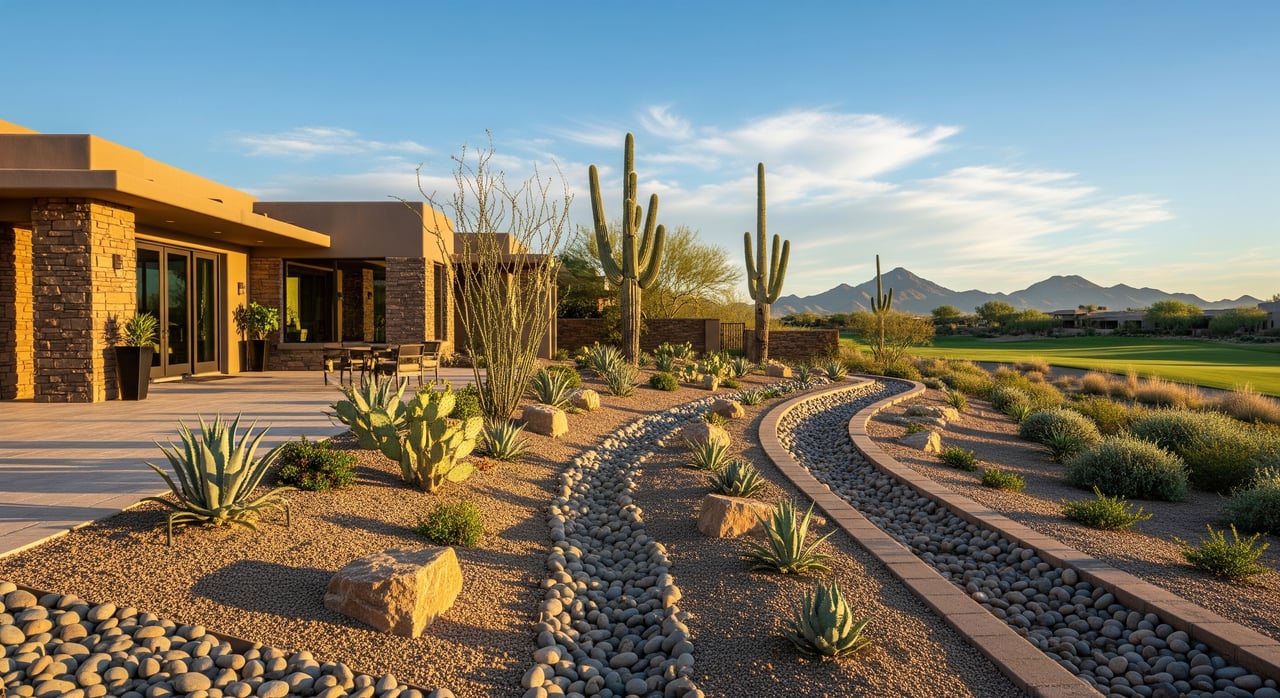
Water‑Smart Irrigation by the Tanque Verde Wash in Tanque Verde
November 6, 2025
November 6, 2025
Hot, dry summers followed by sudden monsoon bursts can make yard care feel like a balancing act, especially when you live near the Tanque Verde Wash. You want a landscape that looks at home in the Sonoran Desert, uses water wisely, and holds up when storms roll through. You also want to avoid accidental drainage mistakes that can create headaches. In this guide, you’ll learn how to tune your drip zones, choose and place mulch, select plants across the riparian edge, and find the right county resources before you change drainage. Let’s dive in.
The Tanque Verde Wash is an ephemeral system. Long dry stretches are followed by short, high‑intensity storm events. Soils near the wash can range from sandy and gravelly to pockets of finer silts and clays. That mix affects how fast water soaks in and how likely runoff becomes. If your home sits in or near the wash corridor, the land has been shaped by episodic flows, so plantings and irrigation need to handle both drought and occasional inundation.
Design choices matter here. Your irrigation should support deep roots and efficient delivery during hot months, while your mulch and plant choices should slow, spread, and sink water without blocking natural flow. Any work that alters banks or redirects runoff can require county review, so planning ahead protects your property and your neighbors.
Smart drip tuning helps you hit root depth without waste. Use the steps below to build a reliable baseline you can adjust seasonally.
Start with the basics. A typical drip setup includes a backflow device, filter, pressure regulator, valves, tubing, and emitters, plus a controller with seasonal or smart features. Confirm your pressure at the dripline. Many drip components operate best in the low psi range, often around 15 to 30 psi. If upstream pressure is higher, make sure a regulator is installed and working. Clean or replace filters so emitters do not clog.
Do not guess your gallons per hour. Isolate one zone, then capture output from a few representative emitters into a measured container for a set time. From that, confirm each emitter’s gph. Multiply by the number of emitters to estimate total zone output. Create a simple zone map that lists plant types and counts of emitters per plant. This gives you a clear picture of what each zone delivers and where.
Match run times and frequency to rooting depth and plant needs.
If you see surface pooling, shorten each cycle and add rest intervals. The goal is to let water infiltrate rather than escape.
Increase frequency and sometimes duration in late spring and summer. Reduce sharply in cool months. After significant rainfall, cut back programs. If your controller has a seasonal adjustment, use it. Consider a rain shutoff and a soil moisture probe so you do not water during or right after storms. These simple checks can save a lot of water.
A short walk saves money and plants. Inspect regularly for leaks, sun‑damaged tubing, clogged or broken emitters, and debris in filters. If pressure varies or lines run long, pressure‑compensating emitters help deliver consistent flow across the zone. Where slopes create runoff, split longer cycles into multiple shorter passes or consider lower‑flow emitters. Use a soil probe after a cycle to confirm moisture reached the depth you intended.
Mulch is your first line of defense for water retention and temperature moderation. Near a wash, it also plays a role in stabilizing soil without blocking natural drainage.
Use organic mulch in planting beds and transitional uplands. Use rock or heavier materials where occasional shallow flows might occur. In gentle flow areas, anchored organic mulch can work well.
Aim for about 2 to 3 inches of organic mulch around trees and shrubs. Keep mulch pulled back 3 to 6 inches from trunks and several inches above the root crown. Do not bury stems. Avoid continuous landscape fabric in beds near the wash because it can block infiltration and root growth. If you expect occasional shallow flows, anchor organic mulch with biodegradable mesh or coir netting so it stays put.
Stability near a wash starts with plants. Maintain or reestablish native grasses and shrubs to bind banks with roots. In problem spots, live staking or appropriate cuttings may help, but verify site suitability and rules first. For concentrated flow paths, rock protection or simple bioengineering techniques can be effective when designed for the site. Coordinate with county staff or a qualified professional before you install anything that alters banks or flow paths.
A smart palette follows the landscape. Place species based on how often an area gets wet and how quickly soils drain.
In zones that can see occasional inundation or saturated soils, select species that tolerate periodic flooding and shifting sediments. Good options include Goodding willow, Fremont cottonwood, velvet mesquite, screwbean mesquite, and desert willow. These trees are adapted to riparian dynamics and can help stabilize banks. Arizona ash can work as well with mindful maintenance.
Just upslope from frequent flows, look for plants that like deeper moisture yet tolerate dry periods. Desert willow performs well here. Shrubs such as Baccharis species and desert hackberry provide structure and stability. Honey mesquite and catclaw acacia can handle the drier margins within this band.
Further from the channel, use desert‑adapted plants that thrive with low water. Penstemon, chuparosa, and brittlebush do well away from frequent inundation. Native bunchgrasses and warm‑season grasses add cover and erosion resistance in transitional upland spots.
Plant slightly above the typical high‑water mark when possible so crowns stay dry while roots can still access moisture. Do not build tight berms that might concentrate or redirect flows. For trees, place multiple emitters or a drip ring under the canopy rather than a single emitter at the trunk. Water more often during the first year or two for establishment. Then taper to deeper, less frequent cycles that encourage strong roots. Pair new plantings with coarse wood‑chip mulch and keep mulch clear of trunks.
Working near a wash calls for a quick check of local rules and maps. This step protects your home and your neighbors and prevents costly do‑overs.
Look up floodplain maps that show the 100‑year floodplain, wash corridors, and any setbacks or bank protection rules. Review thresholds for grading, bank stabilization, or vegetation removal in washes. Seek best practices for yard drainage that spread and infiltrate water rather than concentrating it or pushing it toward a neighbor or the channel bottom.
In Forty Niners Country Club Estates, the Sonoran Desert setting is part of the lifestyle. A water‑smart plan keeps your yard resilient in summer and ready for monsoon events. By tuning drip delivery, placing mulch for both soil health and stability, and selecting plants across the riparian to upland gradient, you set yourself up for long‑term success. Pair those choices with a quick county check before any drainage changes and you will protect your investment while supporting the natural character of the wash.
If you would like neighborhood‑level insight, or a warm introduction to trusted local landscape and drainage professionals, reach out to the team that knows Tanque Verde best. Get started with listings and local guidance at SoldByRebecca. Get Tucson’s Latest Listings.
Stay up to date on the latest real estate trends.

Whether you're buying, selling, or just exploring Tucson real estate possibilities, Rebecca Maher is here to help.