Energy-Efficient Home Upgrades in Eastern Tucson
October 16, 2025
October 16, 2025
Summer heat in Eastern Tucson can feel relentless. If your AC runs nonstop and some rooms never quite cool, you are not alone. The good news is you can boost comfort and cut utility costs with a few targeted upgrades that fit our hot, dry climate. In this guide, you will learn which improvements matter most in Tucson, what incentives can help pay for them, and how to plan upgrades that add value when you sell. Let’s dive in.
Tucson has a long, hot season where cooling dominates home energy use. Local climate data confirm our desert pattern of high cooling demand and mild winters, so your best returns come from reducing heat gain and making cooling more efficient. Tucson sits in IECC climate zone 2B, which guides insulation and glazing choices for this region. Our strong solar resource also makes on‑site generation a smart part of many plans.
If your central AC is aging, consider a high‑efficiency air‑source heat pump or a high‑SEER2 AC. Variable‑speed systems improve part‑load efficiency and comfort. Pair replacements with duct sealing and proper commissioning to stop wasting cooled air in a hot attic. Tucson Electric Power’s Efficient Home Program offers rebates on quality installations, duct sealing, tune‑ups, and assessments, which can materially improve payback.
Your roof and attic take the brunt of Tucson’s sun. Start with air sealing at the attic plane, then bring insulation up toward zone‑appropriate levels. In hot, cooling‑dominant homes with ducts in the attic, adding a radiant barrier alongside insulation and ventilation can lower attic temperatures and reduce peak loads. Savings vary by home, but combining air sealing, insulation, and a radiant barrier can deliver meaningful comfort and bill reductions.
If you are planning a reroof, reflective roofing materials or coatings can reduce solar heat gain. Choose lighter colors or ENERGY STAR‑rated products where appropriate. Ask about durability and maintenance schedules so the finish keeps performing in our intense sun.
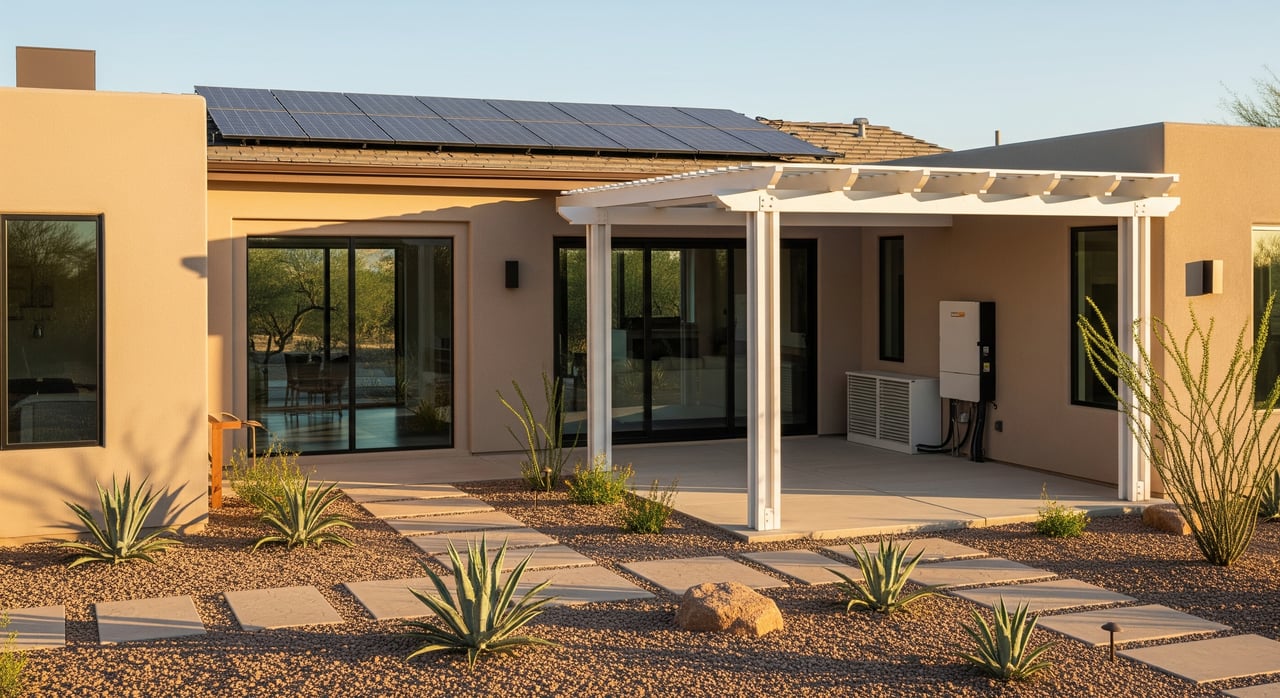
Exterior shading on west and south exposures blocks heat before it enters your home. Awnings, pergolas, vertical screens, and porch additions can outperform interior shades. Where window replacement is not in the budget, heat‑rejecting films and tuned low‑E glazing are practical alternatives. You can also reduce heat gain over time by planting shade trees, and TEP offers discounts on shade trees through its rebate programs.
Heat‑pump water heaters perform well in Tucson’s warm temperatures, using far less electricity than standard electric tanks. They can be a strong second‑priority upgrade after cooling and attic work. TEP currently offers a $400 rebate for qualifying installations.
LED lighting lowers both electric use and unwanted indoor heat. A smart thermostat with thoughtful schedules can trim cooling costs and smooth comfort swings. TEP provides rebates for qualifying smart thermostats, and you may be able to enroll in demand response features if offered.
Tucson’s sunshine makes rooftop solar attractive. Arizona now uses net billing, which means most new systems receive a lower export credit rather than full retail net metering. You can improve economics by sizing your system to offset daytime use and by considering batteries for time‑of‑use shifting. Confirm the current export rate and interconnection process before you sign a contract, and use site‑specific tools to estimate production.
Stacking rebates and credits can significantly shorten payback times. Review these before you start work and save documentation.
If you plan to sell soon, focus on visible, high‑impact comfort upgrades. A recent HVAC tune and duct sealing, an attic insulation and air‑sealing update, LED lighting, and smart thermostat documentation can all reassure buyers about utility costs. Keep invoices, permits, warranties, and any rebate paperwork handy. If your home has solar, gather ownership documents, interconnection agreements, and production data. Research shows owned PV systems often see measurable resale premiums when well documented.
If you are buying, ask for the last 12 months of utility bills, equipment ages and service records, attic insulation levels, and any solar production statements with export terms. A virtual home assessment from TEP can help you prioritize next steps after closing.
Ready to tailor a plan to your home and goals in the Tanque Verde, Catalina Foothills, Oro Valley, or nearby neighborhoods? Let’s talk through comfort upgrades, incentives, and timing so you can enjoy Tucson living year round and position your property for maximum value. Connect with Rebecca Maher for a personal, local strategy.
Stay up to date on the latest real estate trends.

Whether you're buying, selling, or just exploring Tucson real estate possibilities, Rebecca Maher is here to help.